Published by Limo Service Orange | Orange County, CA | Transportation Safety Guide
Limo services in Orange County are, by most measurable standards, significantly safer than rideshare apps and standard taxi options when you choose a properly licensed and regulated operator. Safety is not a feature that comes automatically with every booking. It depends on specific licensing requirements, driver vetting practices, vehicle inspection schedules, and the company’s internal safety culture. If you are considering limo services in Orange County for a wedding, airport transfer, corporate event, or a night out, this guide breaks down exactly what separates a trustworthy operator from a risky one.
The luxury ground transportation industry here operates under California PUC (Public Utilities Commission) oversight, which mandates carrier permits, background checks, and regular vehicle inspections. However, not every company advertising limo services in Orange County online holds an active TCP number or maintains its fleet to the required standard. Knowing what to look for can protect your group, your schedule, and your overall experience.
This article draws on California regulatory requirements, industry inspection standards, and real patterns observed among operators across the region to give you a clear, data-backed picture of safety in the local limo market.
Table of Contents
- How Orange County Limo Regulations Actually Work
- 7 Safety Standards That Reputable Limo Companies Follow
- Limo Services vs. Rideshare: A Safety Comparison
- Common Risk Factors to Watch for When Booking
- How Vehicle Inspection Schedules Affect Rider Safety
- What Chauffeur Training Looks Like at a Professional Level
- How to Choose Safe Limo Services in Orange County
- Does Paying More Mean You Are Safer?
- Conclusion
- Frequently Asked Questions
How Orange County Limo Regulations Actually Work
Any company offering limo services in Orange County for hire must hold a valid TCP (Transportation Charter Party) permit issued by the California Public Utilities Commission. This is not optional. The TCP permit is the baseline legal requirement that separates a legitimate operator from someone running an unlicensed vehicle for profit.
The TCP permit requires companies to carry commercial liability insurance with a minimum of $1.5 million in coverage per occurrence for vehicles carrying eight or fewer passengers, and higher amounts for larger group vehicles. This level of coverage protects riders in the event of an accident, something a standard personal auto policy used by some rideshare drivers does not reliably guarantee during all phases of a trip.
Beyond the permit itself, California law requires that all chauffeurs working for charter-party carriers pass a background check through both the California DOJ and the FBI. Drivers of vehicles carrying 10 or more passengers are also typically required to obtain a Class B commercial driver’s license. These requirements create a meaningful layer of screening that distinguishes professional limo services in Orange County from less regulated transportation options.
Orange County sits within the broader Los Angeles metro transportation corridor, generating constant demand for limo services in Orange County around John Wayne Airport (SNA), Disneyland, the Anaheim Convention Center, and coastal event venues in Newport Beach and Laguna Beach. High demand means more operators competing for business, and competition at scale inevitably brings variation in safety standards.
Understanding the regulatory framework is the first step toward making a genuinely informed booking decision. The rules exist for a reason, and companies that follow them consistently tend to operate very differently from those that treat compliance as optional.
7 Safety Standards That Reputable Limo Companies Follow
When you look past the marketing language and polished websites, the best limo services in Orange County tend to follow a consistent set of operational safety practices. Here are the seven standards that matter most and that you should verify before committing to any booking:
1. Active TCP Permit on File
The company’s TCP number should be verifiable through the CPUC’s public database at cpuc.ca.gov. Any operator that cannot or will not provide this number is running without proper legal authorization. This is a non-negotiable starting point when evaluating limo services in Orange County.
2. Commercial Insurance Documentation Available on Request
Reputable operators keep their certificate of insurance accessible and are prepared to share it with clients who ask. The policy should show active coverage dates and list the specific vehicle types included in the policy.
3. Documented Driver Background Checks
The best companies run both state and federal background checks at the time of hire and conduct annual DMV record pulls. Some also use third-party screening services for additional verification layers beyond the legal minimum.
4. Regular Vehicle Inspections on a Fixed Schedule
Industry best practice for limo services in Orange County is to conduct mechanical inspections every 45 to 90 days, adjusted based on vehicle type and mileage. Stretch limousines and party buses, which carry more passengers per trip, are typically held to tighter inspection intervals by safety-conscious operators.
5. Chauffeur Drug and Alcohol Testing Programs
Companies operating under DOT-regulated contracts, such as airport shuttles and certain corporate transportation accounts, are required to run pre-employment and random drug testing. Many of the better limo services in Orange County apply this same protocol across their entire driver roster, even when not legally obligated to do so.
6. GPS Tracking and Real-Time Dispatch Oversight
Professional fleets use GPS dispatch systems that log every vehicle’s location and speed in real time. This creates an operational safety record for every trip and allows the company to respond quickly if something goes wrong during a ride.
7. Written Emergency and Breakdown Protocols
A safety-focused company has documented procedures for vehicle breakdowns, driver unavailability, and passenger emergencies. Operators who cannot clearly explain this process when asked have simply not built safety into their operations at a meaningful level.
Limo Services vs. Rideshare: A Safety Comparison
Riders frequently ask whether limo services in Orange County are actually safer than Uber or Lyft. The honest answer depends on the context, but for group travel, events, and situations where accountability matters, licensed limo services in Orange County offer a more structured and verifiable safety environment than rideshare platforms can consistently provide.
| Safety Factor | Licensed Limo Service | Rideshare (Uber/Lyft) |
|---|---|---|
| Commercial Insurance | ✓ $1.5M+ required | Varies by phase of trip |
| Driver Background Check | ✓ DOJ + FBI required | Third-party, less rigorous |
| Vehicle Inspection | ✓ Scheduled and documented | ✗ Self-reported by driver |
| Driver Drug Testing | ✓ Many operators test | ✗ Not standard practice |
| Professional Training | ✓ Chauffeur certification | ✗ App-based onboarding only |
| GPS and Dispatch Oversight | ✓ Real-time company monitoring | App-based tracking only |
| Group Capacity | ✓ Party buses up to 40+ seats | ✗ Typically 1 to 4 passengers |
For a solo airport run on a tight budget and schedule, rideshare can be a functional option. But for groups, nighttime transportation around Anaheim or Newport Beach, or any event where you need guaranteed accountability, limo services in Orange County deliver structural safety advantages that rideshare simply does not match at a systemic level.
You can explore the full range of professional transportation services available in Orange County to understand which vehicle type fits your group size and safety requirements.
Common Risk Factors to Watch for When Booking
Not every company promoting limo services in Orange County is operating legally, safely, or with the level of professionalism their website suggests. These are the warning patterns that appear most consistently among unreliable operators:
- No TCP number listed: Every legitimate provider of limo services in Orange County must display their TCP permit number on their website, vehicle, and booking documentation. If you cannot locate it, ask for it directly. If they cannot provide one, do not book.
- Pricing that seems too low to be real: Properly insured limo services in Orange County with maintained fleets and trained chauffeurs have real operating costs. Prices that run 40% to 60% below the local market average are almost always a signal of missing insurance coverage, deferred vehicle maintenance, or unlicensed drivers.
- No written booking confirmation: Trustworthy operators provide a written contract that specifies the vehicle, pickup time, route, total price, and cancellation terms. A verbal agreement over the phone is not a booking by any professional standard.
- No verifiable local business presence: Be cautious of companies that exist only through a phone number with no confirmed office address, no local reviews, and no traceable history in the Orange County market.
- Thin or negative review history: Established and safety-focused limo services in Orange County build a detailed public review record over time. A pattern of complaints about late arrivals, vehicle cleanliness, driver conduct, or billing disputes is worth taking seriously as a safety signal, not just a service quality issue.
Quick Verification Tip: Before finalizing any booking, search the operator’s name in the CPUC Carrier Search portal at cpuc.ca.gov and confirm their TCP permit is currently active. This check takes under two minutes and is the single fastest way to separate licensed limo services in Orange County from unregulated operators.
How Vehicle Inspection Schedules Affect Rider Safety
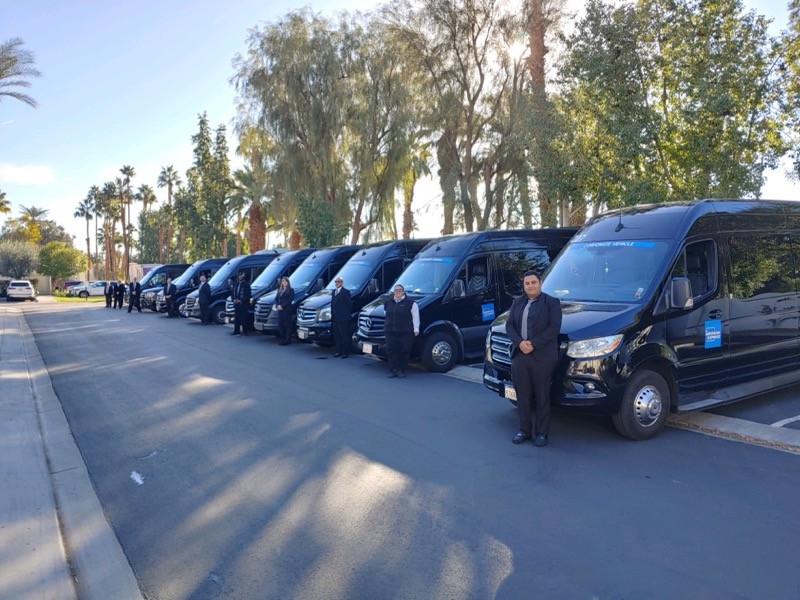
Limousines and party buses are mechanically complex vehicles. Stretch limousines, in particular, are often custom-modified from their original manufacturer configuration. Extended frames, custom suspension components, additional electrical systems, and modified bodywork all require specialized inspection knowledge that a general auto mechanic typically does not have.
California requires that TCP-permitted carriers keep all vehicles in safe operating condition, but the specific inspection interval and method are managed at the carrier level. This flexibility means the rigor of vehicle maintenance programs varies considerably across limo services in Orange County.
What a Thorough Fleet Inspection Should Cover
Professional-grade inspection schedules for limo services in Orange County typically cover: braking systems and brake fluid levels, tire tread depth and inflation, all exterior lighting and turn signals, door latch mechanisms and emergency exit function, fire extinguisher presence and current charge status, first aid kit completeness, seatbelt integrity across every seating position, audio and entertainment system wiring safety, power steering and transmission fluid levels, and the condition of running boards and entry steps.
Party buses carry additional inspection requirements around passenger door mechanisms, interior lighting brightness, non-slip flooring integrity, and handrail stability. These elements are especially relevant for nighttime events where passengers may be moving inside a vehicle that is in motion.
When evaluating limo services in Orange County, it is reasonable to ask: “What is your current vehicle inspection schedule, and can you share the most recent inspection report for the specific vehicle assigned to my booking?” An operator confident in their maintenance program will answer this without hesitation.
Looking at the fleet page of a limo company also gives you useful signals about whether their vehicles are current model years, properly presented, and sized appropriately for your group.
What Chauffeur Training Looks Like at a Professional Level
The word “chauffeur” is not just a branding choice. It reflects a meaningful difference in training, conduct expectations, and professional standards compared to a general driver. When people book limo services in Orange County through a reputable company, they are engaging someone who has gone through structured preparation, not just someone who passed a basic driving test and downloaded an app.
Chauffeur onboarding at professional limo services in Orange County typically covers: defensive driving techniques specific to extended or large vehicles, detailed local route knowledge across Orange County and connecting corridors to Los Angeles and San Diego, passenger assistance protocols including door handling and mobility support, communication and confidentiality standards for corporate and private clients, and emergency response procedures for breakdowns, accidents, or medical situations during a trip.
A growing number of chauffeurs working for established limo services in Orange County also hold current CPR and basic first aid certifications. This is not a universal requirement, but companies that invest in this level of readiness communicate a clear internal safety priority.
Route Knowledge Across Orange County’s High-Traffic Corridors
Driving extended vehicles through Orange County’s specific road network is genuinely challenging. The I-5, I-405, and SR-55 corridors rank among the most congested in the entire state. John Wayne Airport has specific access routes and pickup protocols that require familiarity. Coastal roads through Newport Beach and Laguna Beach involve narrow lanes, heavy pedestrian activity, and seasonal traffic surges.
A chauffeur at one of the best limo services in Orange County does not rely entirely on GPS to navigate these conditions. They plan departure windows based on known traffic patterns, know alternate routes when primary roads are congested, and bring years of direct experience navigating the county’s roads with passengers aboard.
The About Us page at Limo Service Orange outlines how their team approaches chauffeur standards and professional conduct across the Orange County service area.
How to Choose Safe Limo Services in Orange County

Selecting safe limo services in Orange County is about following a consistent verification process, not about trusting branding or website aesthetics. The checklist below gives you a practical framework that applies to any operator, regardless of how professional their online presence looks:
- Verify the TCP permit number through the CPUC’s public carrier search portal. Confirm the permit is active and not suspended or revoked. This is the single most important filter when comparing limo services in Orange County.
- Request proof of commercial insurance before paying any deposit. Confirm the coverage amount matches or exceeds the CA PUC minimum for the vehicle type and passenger count you are booking.
- Read reviews from the last 12 months on Google, Yelp, and event-specific platforms like WeddingWire or The Knot. Look beyond star ratings and focus on specific comments about vehicle condition, driver professionalism, and punctuality.
- Ask about the specific vehicle assigned to your booking. Get the make, model year, seating capacity, and date of the most recent mechanical inspection. Reputable limo services in Orange County track this information as a matter of routine.
- Require a written contract before any payment changes hands. The agreement should specify vehicle type, pickup and drop-off times, service area or route, all-in pricing including gratuity expectations, and a clear cancellation and refund policy.
- Ask about your assigned chauffeur’s credentials. It is a reasonable question to ask whether your driver has passed a background check and holds a current, clean California driving record. Legitimate limo services in Orange County will not treat this question as unusual.
- Confirm a local business presence. Companies with a physical base in Orange County have local reputational accountability that out-of-area booking brokers typically do not.
Any company that resists these questions or treats informed clients as a problem has told you what you need to know. The best limo services in Orange County view safety-conscious customers as the norm, not the exception. To speak with a team that expects and welcomes these questions, visit the Limo Service Orange contact page and get a quote with full transparency on vehicle, driver, and pricing details.
Does Paying More Mean You Are Safer?
This is one of the most practical questions anyone can ask when researching limo services in Orange County. The answer is not a simple yes, but the correlation between price and safety becomes very clear at the extremes of the market.
The lowest-priced operators in any transportation market tend to compress costs in ways that directly affect rider safety. That often means older vehicles with maintenance that gets pushed back, drivers who have not gone through proper screening, insurance that barely meets the legal minimum, and no real operational infrastructure to fall back on when something goes wrong. When clients discover these gaps, it is often after a problem has already occurred.
At the other end of the spectrum, the most expensive option is not automatically the safest. Some premium-priced companies in the area function as booking brokers, not direct operators. They take your reservation and hand it off to whichever subcontractor has availability, with safety standards that can vary considerably across that third-party network. The marketing is premium, but the actual vehicle and driver you receive may come from a different company entirely.
Where the Best Safety Value Tends to Land
Locally-operated limo services in Orange County that own their own fleet, directly employ their chauffeurs, and have operated in the region for multiple years tend to occupy a mid-to-premium price range. They are not the cheapest option you will find with a quick search, and they do not need to be. Their track record and client relationships are their business foundation, and they protect that by maintaining real safety standards consistently.
For most trips in Orange County, expect to pay somewhere between $85 and $150 per hour for a standard stretch limousine, and $120 to $250 per hour for a party bus, depending on size, timing, and season. Quotes well below this range for a properly insured and inspected vehicle should prompt you to ask more questions before booking.
If you want transparent pricing from a locally-operated provider, the Limo Service Orange contact page offers direct quotes tailored to your specific trip, group size, and event type.
Conclusion
Limo services in Orange County are, when properly licensed and operated, among the safest forms of group transportation available in Southern California. California’s PUC regulatory framework creates a meaningful floor of insurance, driver screening, and vehicle standards that rideshare and unregulated operators are not required to meet.
But safety is not something you can assume based on a company’s name or website. It must be verified. Licensing checks, insurance confirmation, vehicle inspection records, and chauffeur credentialing are the tools that separate genuinely safe limo services in Orange County from operators that look professional until something goes wrong.
Whether you are planning a wedding in Laguna Beach, a corporate airport transfer to John Wayne Airport, or a group night out in Anaheim, the right limo services in Orange County will welcome every safety question you bring. That openness and transparency is itself one of the clearest signals that you are working with an operator worth trusting. Start with the Limo Service Orange homepage to explore what a fully licensed, locally operated, safety-first fleet looks like in practice.
Frequently Asked Questions
Are limo services in Orange County required to carry commercial insurance?
Yes. Every operator providing limo services in Orange County under a California TCP permit must carry commercial liability insurance with a minimum of $1.5 million per occurrence for vehicles under nine passengers, and higher amounts for larger vehicles. You can request a certificate of insurance directly from any operator before booking to confirm their coverage is active and current.
How do I check if a limo company in Orange County is legally licensed?
Use the CPUC’s online carrier search tool at cpuc.ca.gov. Enter the company name or their TCP permit number and confirm the permit status is active. All legitimate limo services in Orange County are required to hold and display this permit. If a company cannot provide a TCP number when asked, treat that as a clear disqualifying sign.
How do limo services in Orange County compare to rideshare for group safety?
For group travel, limo services in Orange County are generally safer in terms of commercial insurance minimums, background check rigor, vehicle inspection standards, and professional chauffeur training. Rideshare drivers are not held to the same DOJ and FBI background check requirements, vehicle inspections are self-reported by the driver, and insurance coverage during certain phases of a rideshare trip can be limited or contested. For groups, late-night travel, or accountability-critical events, a licensed limo service offers structural advantages that rideshare platforms do not consistently match.
What questions should I ask before booking limo services in Orange County?
Ask for the company’s TCP number, request proof of commercial insurance, ask about the model year and last inspection date of your assigned vehicle, confirm your chauffeur has passed a background check, and ask what happens if the vehicle breaks down or the driver is unavailable. Reliable limo services in Orange County will answer all of these questions clearly and without hesitation. If an operator deflects or becomes evasive, that is meaningful information about how they operate.
Do chauffeurs for limo services in Orange County need special licensing?
Yes. Drivers operating vehicles that carry 10 or more passengers are required to hold a Class B commercial driver’s license in California. All chauffeurs at TCP-permitted limo services in Orange County must pass background checks through both the California DOJ and the FBI. Professional companies go beyond the legal baseline with additional training in defensive driving, route knowledge, passenger handling, and emergency procedures. The depth of this training varies by operator, which is why asking about it before booking is a reasonable part of your evaluation process.
Are party buses held to the same safety standards as limousines in Orange County?
Yes. Party buses operated as charter vehicles in California must hold the same TCP permit as limousines, carry commercial insurance scaled to their passenger capacity, and use drivers who meet background check and license requirements. Because party buses carry larger groups and involve more passenger movement during travel, reputable limo services in Orange County apply additional inspection focus to interior safety features including handrails, non-slip flooring, door mechanisms, and emergency exit functionality.
How far in advance should I book limo services in Orange County?
For weddings, proms, and large corporate events, booking four to six weeks ahead is strongly recommended. For airport transfers or smaller group outings, one to two weeks is generally enough for established limo services in Orange County. Booking early also gives you time to verify licensing and insurance documentation, review the contract carefully, and confirm vehicle and driver details without last-minute pressure. Rushed last-minute bookings sometimes push riders toward less reputable operators simply because those companies happen to have availability when trusted providers do not.
Follow and Connect with Limo Service Orange